


 Español

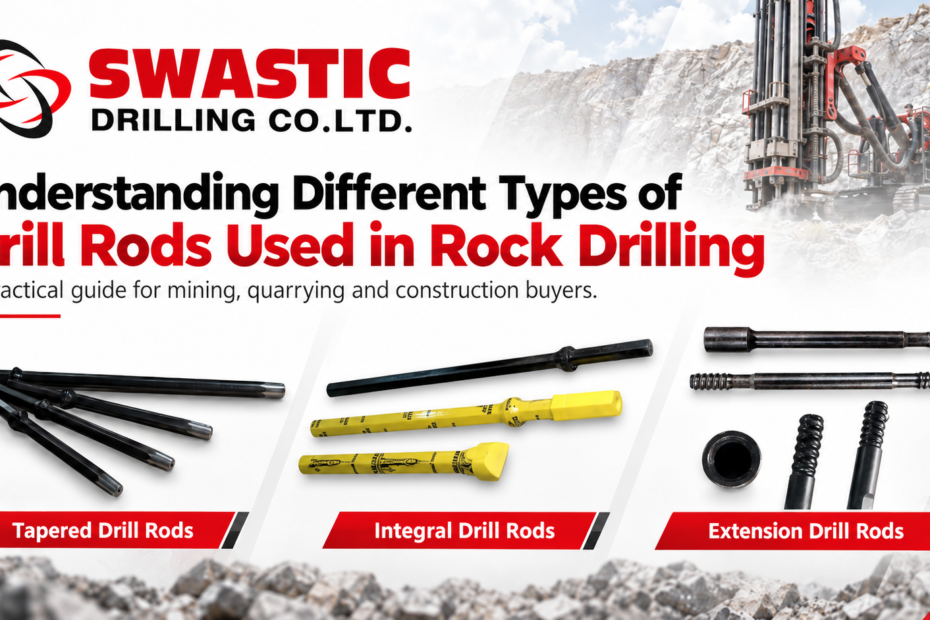
In rock drilling, choosing the right equipment is important, but selecting the right drill rod is equally essential. Whether drilling in a quarry, underground mine or construction site, the type of drill rod used can influence drilling stability, tool compatibility, maintenance requirements and overall productivity.
Not all drill rods are designed for the same purpose. Some are suitable for shorter holes, while others allow drilling to greater depths through connected rod sections. Understanding these differences helps buyers select equipment that matches their drilling conditions and operational needs.
Let’s explore three commonly used types of rock drill rods: tapered, integral and extension drill rods.
1. Tapered Drill Rods: Designed for Replaceable Drill Bits
Tapered drill rods are commonly used with pneumatic rock drills in mining, quarrying and construction applications. These rods feature a tapered end that connects with a compatible drill bit, allowing the cutting tool to be replaced separately from the rod.
This arrangement is particularly useful where drill bits experience regular wear during drilling.
Key Features:
- Tapered connection designed for compatible rock drill bits.
- Replaceable drill bits for easier cutting-tool maintenance.
- Suitable for various short-hole rock drilling applications.
- Commonly used with compatible handheld pneumatic rock drills.
Applications: Quarry drilling, secondary blasting, mining and construction-related rock excavation.
When selecting a tapered drill rods manufacturer, buyers should verify the taper angle, rod length, shank dimensions and compatibility with their drilling equipment.
2. Integral Drill Rods: A Simple One-Piece Drilling Solution
Integral drill rods combine the drill steel and cutting head into a single unit. Unlike tapered rods, they do not require a separately fitted drill bit.
Their one-piece construction eliminates the need for a separate bit-to-rod connection, making them a practical option for suitable handheld rock drilling applications.
Key Features:
- Integrated cutting head and drill steel.
- No separate drill bit connection required.
- Straightforward handling and tool replacement.
- Suitable for compatible handheld pneumatic drilling machines.
Applications: Short-hole drilling, quarry operations, rock excavation and selected mining applications.
For buyers evaluating an integral drill rods manufacturer, important considerations include rod length, shank compatibility, cutting-head configuration and suitability for the intended rock formation.
Because the cutting head is integrated, buyers should also consider how the complete tool will be maintained or replaced when it reaches its service limit.
3. Extension Drill Rods: Suitable for Deeper Drilling Requirements
Unlike tapered and integral systems, extension drill rods are designed to connect multiple rod sections, allowing the drill string to extend as drilling progresses.
These rods generally use threaded connections and compatible coupling arrangements, depending on the drilling system.
They are commonly associated with applications where the required hole depth exceeds the practical working length of a single drill rod.
Key Features:
- Threaded connections for joining compatible drill rod sections.
- Ability to extend the drilling string progressively.
- Suitable for drilling systems requiring greater hole depths.
- Compatible with specific coupling sleeves, bits and shank adapters.
Applications: Bench drilling, tunnelling, mining and other applications requiring extended drill strings.
When choosing an extension drill rods manufacturer, buyers should examine thread compatibility, rod dimensions, connection quality and the drilling machine’s requirements.
Correctly matched components are essential for maintaining a dependable drilling assembly.
Tapered vs Integral vs Extension Drill Rods: Key Differences
| Feature | Tapered Drill Rods | Integral Drill Rods | Extension Drill Rods |
| Connection | Tapered bit fitting | Integrated cutting head | Threaded connections |
| Bit replacement | Separate bit | Complete or serviced integral steel | Separate bit |
| Hole depth | Generally shorter holes | Generally shorter holes | Longer holes using connected sections |
| Main advantage | Replaceable cutting tool | Simple one-piece construction | Extendable drill string |
| Common use | Quarrying and rock excavation | Handheld rock drilling | Mining and tunnelling |
How to Choose the Right Drill Rod for Your Application
Choosing the right drill rod involves more than comparing prices. Buyers should consider several practical factors before placing an order.
1. Rock Formation: Rock hardness and abrasiveness influence cutting-tool selection, wear and maintenance requirements.
2. Hole Diameter and Depth: The required drilling dimensions help determine whether a single-rod or extension system is appropriate.
3. Machine Compatibility: Always confirm shank dimensions, thread types, taper connections and bit compatibility.
4. Product Quality: Consistent manufacturing, material selection and dimensional accuracy are important considerations when evaluating drilling consumables.
5. Supplier Support: An experienced drill rods supplier should help buyers identify suitable configurations and confirm technical requirements before ordering.
Why Choosing the Right Drill Rod Manufacturer Matters
Working with a dependable drill rods manufacturer helps buyers source products that meet their equipment and application requirements.
When evaluating a drill rods manufacturer in India, buyers should look beyond product availability. Clear technical information, compatibility guidance, product consistency and responsive communication are equally important.
Swastic Drilling Company Limited offers rock drilling equipment and consumables for industrial drilling applications. Buyers can discuss their drilling requirements to identify suitable product configurations.
Conclusion
Tapered, integral and extension drill rods serve different purposes in rock drilling. Tapered rods offer replaceable bit connections, integral rods provide a straightforward one-piece arrangement, and extension rods allow drill strings to reach greater depths.
Understanding these differences helps mining and construction buyers make informed purchasing decisions while reducing the risk of incompatible equipment.
Phone: +91 7065551900
Email: sales@drillmanindia.com
Website: www.drillmanindia.com

