


 Español

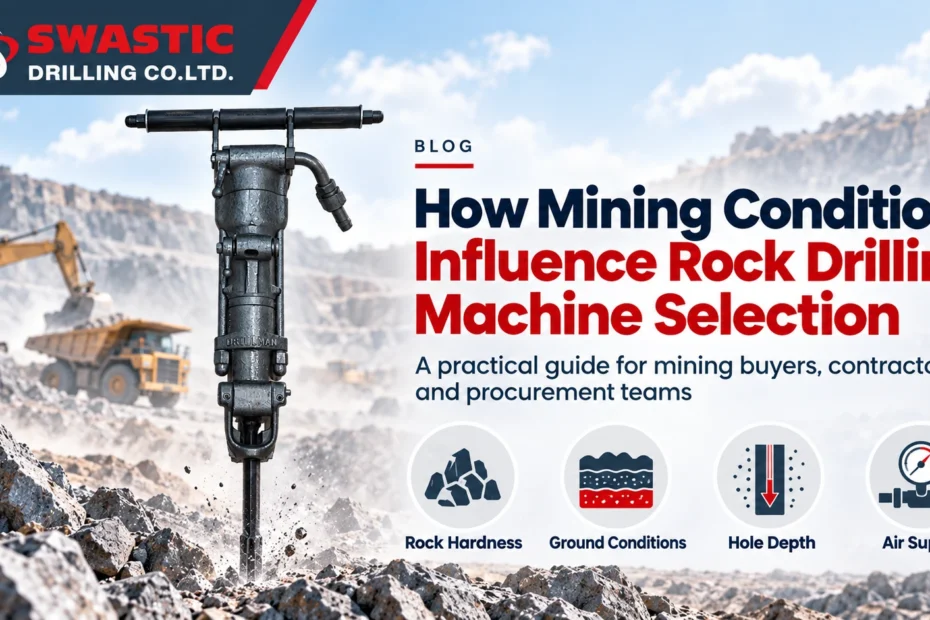
A rock drilling machine can look perfect on paper and still perform poorly at the mine site.Why? Because drilling conditions are rarely identical.
The same machine may behave very differently in hard competent rock, fractured ground, abrasive formations or a confined underground heading. Hole depth, drilling direction, available compressed air, flushing conditions and production targets can all change what type of equipment is suitable.
This is why experienced buyers do not begin with the question:
“Which rock drilling machine has the highest power?”
They begin with a more practical question:
“What are the actual drilling conditions at our site?”
Choosing the right rock drilling machine starts with understanding the application. When equipment is matched correctly to the rock formation, hole requirement and operating environment, drilling can become more consistent, tool wear can be better controlled and maintenance planning becomes easier.
Effective rock drilling machine selection depends on matching the machine to the actual rock formation, hole requirement and operating environment.
For mining companies, contractors and procurement teams, the following conditions should be evaluated before selecting any drilling machine.
1. Rock Hardness Affects the Entire Drilling System
Rock hardness is one of the most important factors in equipment selection.
Soft and medium-hard formations generally behave differently from hard, compact rock. In harder formations, the drilling system must deliver suitable impact energy while maintaining controlled feed and rotation.
However, more power does not automatically mean better drilling.
The rock drill, drill steel and drill bit should operate as a matched system. If one component is unsuitable for the formation, the result can be unnecessary wear, unstable drilling or reduced performance.
Before selecting a machine, buyers should provide the supplier with clear information about the expected rock type and general hardness. This gives the rock drilling machine manufacturer a stronger basis for recommending a suitable configuration.
2. Abrasiveness Influences Consumable Life
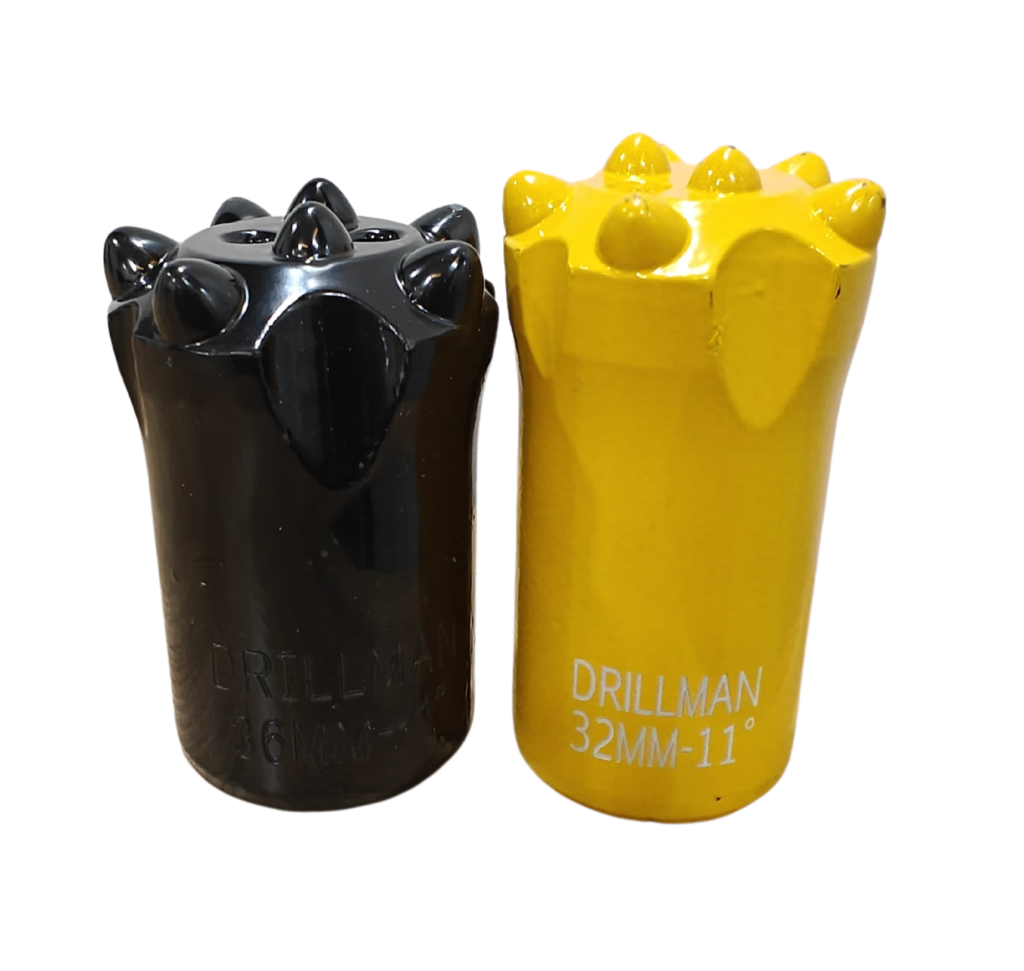
Rock hardness and abrasiveness are not the same thing.
Some formations may not be extremely hard but can still cause rapid wear on drill bits, rods and other components that remain in contact with the rock.
In abrasive conditions, buyers should look beyond the initial cost of the machine and consider the complete drilling system.
Important points include:
- drill-bit suitability;
- drill-steel compatibility;
- expected consumable wear;
- replacement frequency; and
- availability of spare parts.
A low-cost machine can become expensive to operate if consumables wear quickly or replacements are difficult to source.
For long-term mining operations, buyers should therefore evaluate the total rock drilling equipment setup rather than focusing only on the purchase price.
3. Ground Structure Changes Drilling Behavior
Mining formations are rarely uniform across an entire site.
A drilling location may contain solid rock in one section and fractured, jointed or broken ground in another. These changes influence how the drill reacts to the formation and how effectively cuttings can be removed.
Before choosing a rock drilling machine, buyers should identify whether the working area mainly contains:
- compact and uniform rock;
- fractured formations;
- jointed ground;
- broken rock; or
- mixed geological layers.
Where geological conditions change frequently, the ability to work with suitable drilling parameters and compatible consumables may be more useful than simply choosing equipment with the highest rated output.
4. Hole Diameter, Depth and Direction Must Be Defined First
One of the biggest mistakes in machine selection is choosing equipment before clearly defining the hole requirement.
The better approach is to start with the application.
Hole Diameter
The required hole diameter depends on the drilling task, such as blasting, development work, quarrying, construction or other rock excavation requirements.
Hole Depth
As hole depth increases, drill-steel performance, flushing and energy transfer become more important.
Drilling Direction
Horizontal, vertical, inclined and overhead holes can place different demands on the equipment and operator.
A drilling machine should therefore be chosen according to the actual hole specification rather than trying to adjust the application around the machine.
5. Underground and Surface Conditions Require Different Equipment Thinking
The working environment has a direct influence on machine suitability.
Underground operations often involve restricted space, difficult access, limited movement and frequent changes in drilling position. In these situations, equipment size and handling become important selection factors.
Surface operations usually offer more room but may involve larger drilling patterns, higher production targets and more machine movement.
A pneumatic rock drill may be suitable for certain underground, quarrying, construction or development applications where compressed air is available and the drilling requirement matches the machine.
Other applications may require a different drilling solution.
The key question is not whether a machine is powerful.
It is whether that machine can operate effectively in the actual working environment.
6. Compressed Air Capacity Must Match a Pneumatic Rock Drill
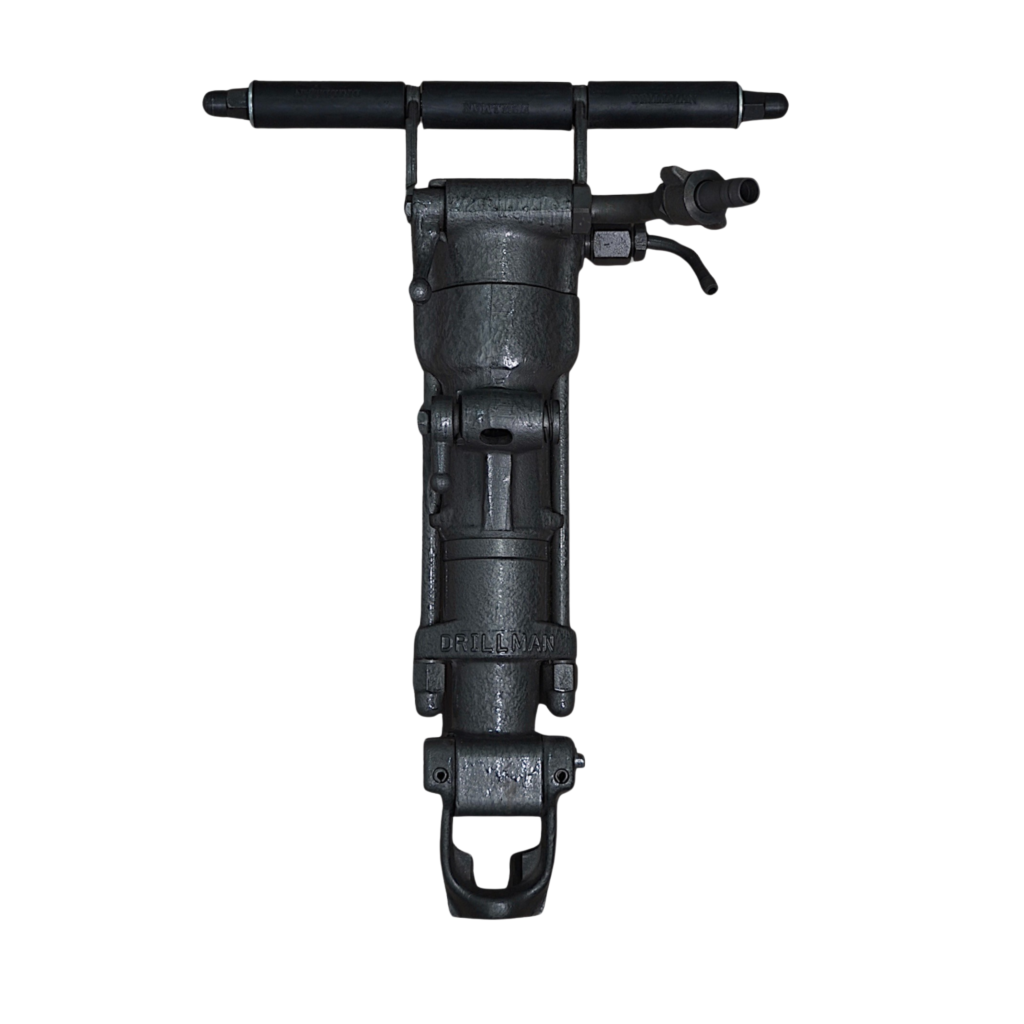
For pneumatic drilling, the compressor is part of the drilling system.
A pneumatic rock drill depends on sufficient air pressure and airflow to operate properly. If the compressor is undersized, the machine may not deliver the expected performance.
Hose diameter, hose length and the number of machines connected to the same air supply can also affect operation.
Before contacting a pneumatic rock drill manufacturer, buyers should ideally know:
- available compressor capacity;
- operating air pressure;
- hose diameter;
- approximate hose length;
- number of drills operating simultaneously; and
- expected drilling conditions.
Selecting the drill without considering the air supply can create performance issues after installation.
7. Flushing Conditions Affect Drilling Efficiency
Breaking rock is only one part of the drilling process.
The broken material also needs to be removed from the hole.
If cuttings remain around the drill bit, drilling efficiency can reduce because the bit may continue working through already fractured material instead of directly attacking fresh rock.
This makes flushing an important part of machine selection.
Depending on the drilling method and site conditions, buyers should consider:
- water availability;
- air availability;
- expected hole depth;
- volume of cuttings; and
- dust or water restrictions at the site.
A suitable drilling system should support both effective rock breaking and proper removal of cuttings.
8. Working Space Can Limit Machine Size
A machine may be technically capable of performing the job but still be unsuitable if it cannot be handled comfortably at the worksite.
This is particularly important in underground tunnels, development headings and confined drilling areas.
Before purchasing equipment, buyers should evaluate:
- available drilling space;
- access to the drilling point;
- machine handling requirements;
- drilling position;
- operator movement; and
- transportation between work areas.
Compact equipment may be more practical in restricted conditions, while open sites may allow greater flexibility.
The largest machine is not necessarily the best machine.
The right machine is the one that fits the site and the drilling requirement.
9. Production Targets Should Guide Equipment Selection
A machine used for occasional development work does not have the same requirement as equipment operating continuously across several shifts.
Before purchasing, buyers should estimate the expected workload.
Key questions include:
- How many holes are required per shift?
- What is the average hole depth?
- How many shifts will the machine operate?
- Will the equipment run continuously or intermittently?
- How often will the machine move between drilling locations?
These answers help determine whether the operation requires a lightweight handheld system, a supported drilling arrangement or a larger mechanised solution.
Clear production requirements also make it easier to compare equipment realistically.
10. Maintenance Conditions Matter After Installation
Machine selection should not end with drilling performance.
Maintenance requirements, spare-part availability and consumable support become important once the equipment begins operating.
This is especially relevant for remote mining locations.
Before purchase, buyers should ask about:
- routine maintenance;
- lubrication;
- wear components;
- inspection requirements;
- availability of spare parts; and
- compatible drilling consumables.
The objective is not only to improve drilling productivity, but also to keep the machine practical to maintain throughout its working life.
Buyer Checklist Before Selecting a Rock Drilling Machine
Before approaching a supplier, prepare the following information:
| Requirement | Information to Provide |
| Rock formation | Hardness, abrasiveness and geological structure |
| Working environment | Surface or underground |
| Hole requirement | Diameter, depth and direction |
| Air supply | Compressor capacity and operating pressure |
| Flushing | Air or water availability |
| Production target | Holes or drilling metres per shift |
| Working space | Open, restricted or confined |
| Consumables | Drill bit and drill steel requirement |
| Maintenance | Spare parts and service requirements |
This information allows the rock drilling machine manufacturer to understand the application more clearly and recommend equipment based on actual working conditions.
Select the Drilling System, Not Just the Machine
A rock drilling machine should never be evaluated in isolation.
Overall drilling performance depends on how the rock drill, drill steel, drill bit, air supply, flushing arrangement and operating conditions work together.
A well-matched system can help deliver more consistent drilling and reduce unnecessary wear caused by incompatible components.
For buyers, this system-based approach is more useful than comparing individual machine specifications alone.
Choosing the Right Rock Drilling Machine for Your Mining Conditions
Mining conditions have a direct influence on rock drilling machine selection.
Rock hardness, abrasiveness, ground structure, hole dimensions, drilling direction, compressed-air availability, flushing conditions, working space and production targets should all be considered before purchasing equipment.
Swastic Drilling Company Limited manufactures rock drilling machinery and related equipment for mining, quarrying and rock drilling applications. For buyers, effective rock drilling machine selection means evaluating the complete drilling system rather than comparing machine specifications alone.
When discussing your requirement with our team, share details such as rock type, hole diameter, expected hole depth, drilling direction and available air supply. This helps the technical sales team understand the application and discuss a suitable drilling configuration for your working conditions.
Frequently Asked Questions About Rock Drilling Machine Selection
1. What factors affect rock drilling machine selection?
Rock drilling machine selection should consider the rock hardness, abrasiveness, geological structure, hole diameter, hole depth, drilling direction, available compressed-air supply, flushing conditions, working space, production requirements and maintenance support. These factors help determine whether a machine is suitable for the actual drilling environment.
2. Which rock drilling machine is suitable for hard rock?
There is no single machine that is automatically suitable for every hard-rock application. In hard and compact formations, the drilling system needs suitable impact energy together with controlled feed and rotation. The rock drill, drill steel and drill bit should also be compatible with the formation and with each other.
3. How does compressed-air capacity affect a pneumatic rock drill?
A pneumatic rock drill depends on adequate airflow and operating pressure. Compressor capacity, hose diameter, hose length and the number of machines connected to the same air supply can all influence how the drill operates. Buyers should therefore evaluate the air-supply system before selecting the machine.
4. Why are hole diameter, depth and drilling direction important?
Different hole requirements place different demands on the drilling system. Hole diameter affects the drilling task, greater hole depth can increase the importance of energy transfer and flushing, and horizontal, vertical, inclined or overhead drilling can require different equipment and handling considerations.
5. What information should I give a rock drilling machine manufacturer?
Before requesting a recommendation or quotation, provide details such as:
- Rock formation and hardness
- Abrasiveness and geological structure
- Surface or underground operation
- Required hole diameter and depth
- Drilling direction
- Compressor capacity and operating pressure
- Air or water availability for flushing
- Production target
- Available working space
- Drill bit and drill steel requirements
- Spare-parts and maintenance needs
Swastic Drilling Company Limited | DRILLMAN
www.drillmanindia.com
sales@drillmanindia.com
+91 9311036100

