


 Español

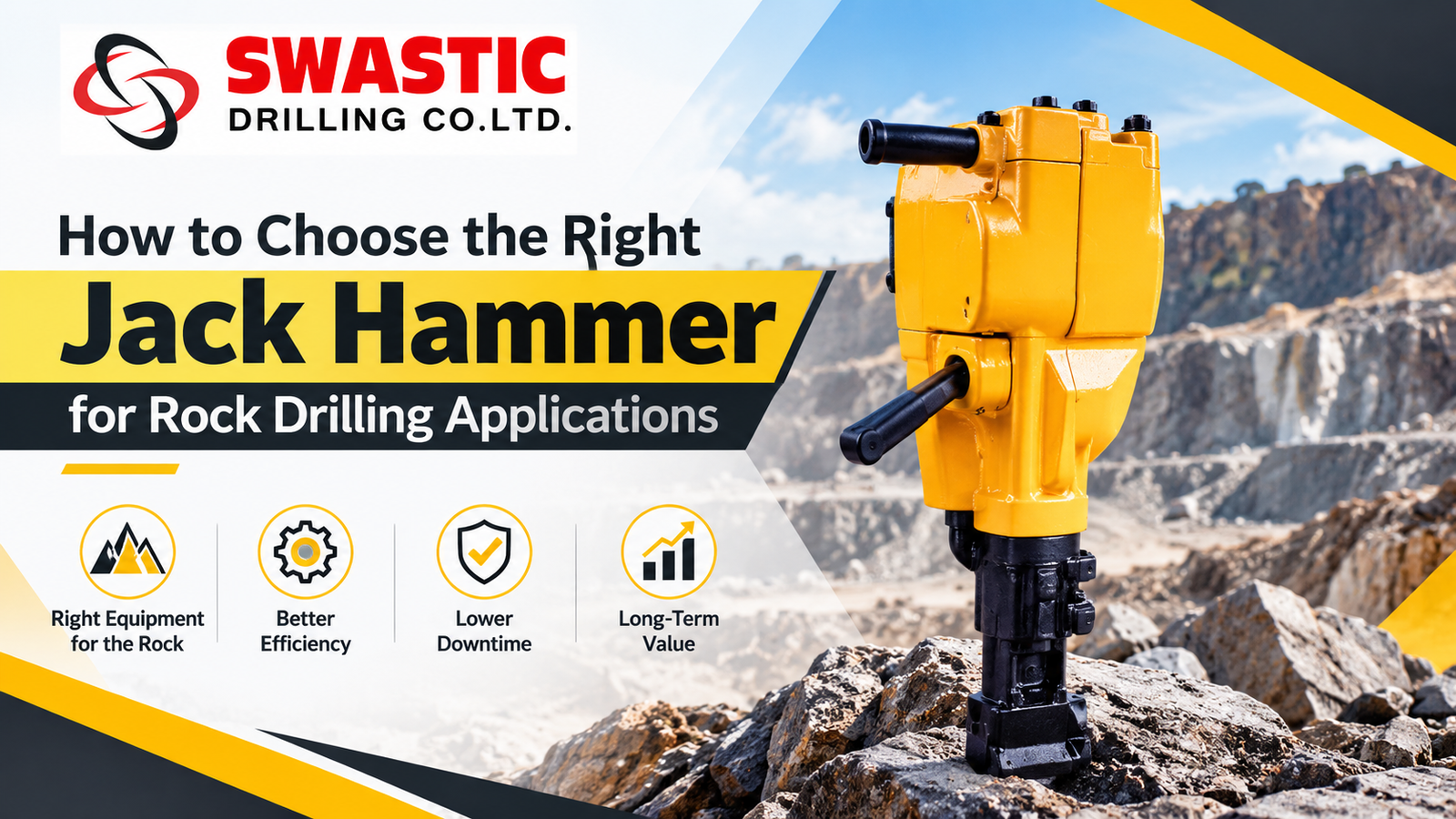
Selecting a jack hammer for industrial drilling involves more than comparing machine power or purchase costs. The equipment must be suitable for the type of rock, the required drilling operation and the working environment.
In mining and quarrying, drilling conditions can change even within the same site. A machine operating efficiently in one section may encounter difficulties elsewhere due to variations in rock structure, air supply or drilling depth.
For buyers, choosing a jack hammer drill machine means evaluating how the equipment will perform as part of a complete drilling system. Understanding a few technical considerations can help make this decision more accurate.
Understanding the Drilling Requirements Before Equipment Selection
Every drilling operation has a specific purpose. Some projects require numerous shallow holes, while others involve deeper drilling in challenging rock formations.
The machine selection process should begin with three important details:
- Hole dimensions: The required diameter and depth influence machine and accessory selection.
- Working direction: Downward, horizontal and inclined drilling may require different handling arrangements.
- Operating frequency: The expected workload helps determine equipment utilisation and servicing needs.
Defining these requirements allows buyers to compare equipment based on its suitability for the intended task rather than relying on general product descriptions.
How Jack Hammer Drilling Mechanisms Affect Rock Penetration
Understanding how drilling energy reaches the rock is useful when examining machine specifications.
In a percussive rock drill, an internal piston generates repeated impacts. These impacts travel through the drill steel towards the bit, where the energy is concentrated against the rock surface.
In rotary-percussive machines, the bit also rotates between impacts, allowing its cutting elements to engage different areas of the hole bottom.
A pneumatic rock drill uses compressed air to operate its mechanism.
Effective drilling depends on the interaction of impact energy, rotation, drill steel compatibility and the removal of rock cuttings. Evaluating only the impact rate does not provide a complete picture of drilling performance.
Choosing Between Pneumatic and Petrol Jack Hammers
Power availability is an important factor in determining the appropriate equipment type.
A pneumatic rock drill machine operates using compressed air supplied through a compressor system. It is commonly used in mining, quarrying and construction activities where suitable air infrastructure is available.
The compressor must deliver the required pressure and airflow during operation. Hose restrictions and leakage can influence the air supply reaching the machine.
A Petrol jackhammer operates using an internal combustion engine and can be considered for suitable outdoor applications without compressor infrastructure.
However, buyers should confirm whether the selected petrol-powered model is intended for drilling, breaking or both. Exhaust emissions, fuel handling and maintenance requirements must also be assessed.
Why Rock Formation Matters More Than General Hardness Ratings
Rock hardness is only one characteristic that affects drilling.
A formation may contain abrasive minerals, fractured layers or changes in density. These conditions can influence how a drill bit engages the rock and how quickly cutting surfaces wear.
For example, abrasive material may increase bit wear, while heavily fractured formations can create uneven resistance during drilling.
Equipment buyers should examine the expected geological conditions and select compatible drilling tools accordingly.
Where drilling takes place across different rock formations, previous drilling records can provide useful information about tool wear and operating difficulties.
Examining Drill Rods, Bits and Connection Compatibility
The machine, drill rod and bit operate as a connected mechanical system.
Impact energy passes through the drill steel before reaching the rock. For this reason, the rod configuration and connection dimensions must match the selected drilling machine.
Incorrect accessories can create mechanical problems and may contribute to premature wear.
Before ordering, buyers should confirm the required bit diameter, rod length, shank configuration and approved connection type.
The availability of suitable replacement consumables should also be considered when evaluating equipment for regular industrial use.
Assessing Equipment Efficiency Beyond Drilling Speed
A machine’s drilling speed does not represent the total time required to complete a drilling task.
Operators must position the equipment, drill the hole, withdraw the tools and prepare for the next location.
Where equipment is frequently repositioned, machine weight and handling arrangements can influence the working cycle.
Longer drilling operations may place greater importance on operating consistency, suitable support equipment and the availability of compatible consumables.
When possible, buyers can use site trials or verified operating records to evaluate equipment under comparable conditions.
Understanding Maintenance Requirements and Operating Costs
Purchase price alone cannot indicate the overall cost of using a jack hammer.
Routine servicing, replacement drilling tools, compressor operation or fuel consumption all contribute to expenditure.
Before purchasing, buyers should review the manufacturer’s instructions for lubrication, component inspection and scheduled maintenance.
A clear understanding of these requirements helps organisations plan equipment servicing and spare-parts inventory.
Rather than comparing machines solely by price, buyers can evaluate the expected operating expenses for a defined workload.
Selecting a Jackhammer Supplier for Technical Support
A suitable jackhammer supplier should provide relevant technical information to support the purchasing decision.
Buyers should request product specifications, approved drilling accessories, operating instructions and available replacement-part information.
When approaching a pneumatic rock drill manufacturer in India, providing details of rock conditions, hole requirements and site infrastructure allows a more focused discussion about equipment suitability.
Technical clarity before purchasing can help prevent compatibility problems once the equipment reaches the drilling location.
Conclusion
Choosing the right jack hammer requires a complete understanding of the drilling application rather than an isolated comparison of machine specifications.
The required hole dimensions, rock characteristics, available power source and drilling accessories all influence the selection process. Equipment handling, maintenance requirements and long-term operating expenses are equally relevant.
Product: Jackhammer
Email: sales@drillmanindia.com
Phone: +91 7065551900

