


 Español

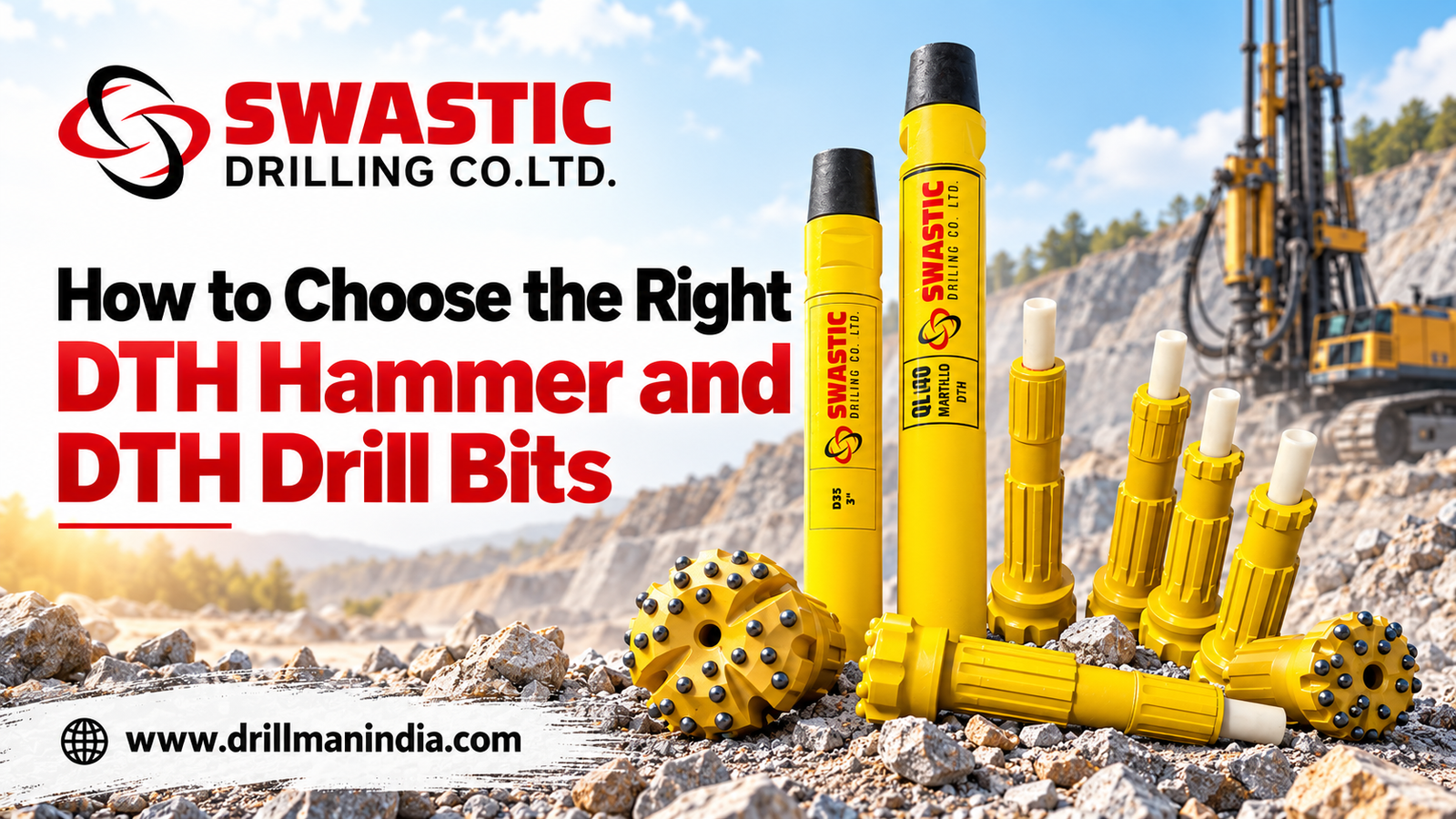
Choosing the right drilling equipment is not simply about buying a powerful hammer or a durable drill bit. It is about finding a combination that works efficiently with your rock conditions, drilling requirements, and available machinery. A mismatched DTH hammer and drill bit can lead to slower penetration, excessive wear, higher operating costs, and unexpected downtime.
For mining contractors, quarry operators, and drilling professionals, understanding how to select the right DTH hammer and bits can make a significant difference in daily operations.
This guide explains the key factors to consider before investing in DTH drilling equipment.
Understanding How DTH Hammers and Drill Bits Work
A DTH hammer (Down-The-Hole hammer) is a percussion drilling tool used in mining, quarrying, construction, and water well drilling. Unlike conventional top hammer drilling, where impact energy travels through the drill string, a DTH drilling hammer delivers repeated impacts directly to the drill bit at the bottom of the hole.
The hammer operates using compressed air, while rotation helps the bit break rock across the hole face. Air also carries rock cuttings out of the borehole.
DTH drill bits receive the hammer’s impact energy and break the rock through their carbide buttons. Both components must work together for efficient drilling and reliable performance.
1. Understand Your Rock Formation
Rock conditions are among the most important factors when selecting drilling tools.
Different formations create different challenges:
- Hard rock: Requires suitable impact energy and wear-resistant button designs.
- Soft to medium formations: May allow more aggressive cutting structures for faster penetration.
- Abrasive rock: Demands careful attention to button wear and bit body durability.
- Fractured formations: Require suitable bit geometry and effective flushing to maintain drilling stability.
Before contacting a DTH hammer manufacturer, provide details about rock hardness, abrasiveness, fractures, and groundwater conditions. This helps identify equipment suited to the actual drilling environment.
2. Select the Correct Hammer Size and Hole Diameter
Every drilling application has specific requirements for hole diameter and depth.
A hammer that is too large or too small for the required hole can create performance and operational problems. The selected bit must also provide sufficient clearance around the hammer for removing rock cuttings.
When choosing a hammer, consider the required hole diameter, hammer outside diameter, drilling depth, and rig compatibility.
An experienced DTH hammer supplier can help assess these factors before recommending a suitable configuration.
3. Match the Hammer with Your Air Compressor
Compressed air powers the hammer and helps clear cuttings from the hole. Therefore, compressor compatibility is essential.
Two important factors are:
Air pressure: The compressor must deliver pressure within the hammer’s specified operating range.
Air volume: Adequate airflow is required for hammer operation and effective hole cleaning.
Insufficient air supply may reduce drilling efficiency and cause poor flushing. Always compare the hammer’s air consumption requirements with the compressor’s actual available output under working conditions.
4. Choose the Right DTH Drill Bit Design
Not all drill bits perform equally across different rock formations. Bit face design and carbide button shape influence penetration, stability, and wear.
Common face designs include:
- Flat face: Often suitable for hard and fractured formations.
- Concave face: Commonly selected where hole straightness and stable drilling are priorities.
- Convex face: Can offer effective penetration in suitable softer to medium-hard formations.
Spherical and ballistic buttons also have different operating characteristics. Spherical buttons are commonly considered for demanding, abrasive conditions, while ballistic buttons may offer faster penetration in suitable formations.
Discuss your application with a DTH drill bit manufacturer before finalising the bit design.
5. Check Hammer and Drill Bit Compatibility
One common purchasing mistake is selecting bits based only on diameter.
The bit shank must match the hammer’s chuck and internal connection design. Two bits with identical cutting diameters may have different shanks and may not be interchangeable.
Before purchasing, confirm:
- Hammer model and size
- Bit shank type
- Required drilling diameter
- Drill rod connection
- Recommended operating conditions
A reliable DTH drill bit supplier should be able to verify these details to help avoid incorrect purchases.
6. Consider Maintenance and Total Drilling Cost
The lowest initial equipment price does not always mean the lowest drilling cost.
When comparing equipment, consider penetration rate, bit wear, maintenance requirements, spare parts availability, and downtime.
Regular inspections, correct operating settings, and appropriate lubrication can help maintain hammer performance. Worn bits should be inspected and serviced according to the manufacturer’s recommendations.
When evaluating a DTH hammer manufacturer in India, buyers should consider technical guidance, product compatibility, replacement components, and after-sales support alongside the purchase price.
Conclusion
Selecting the right DTH hammer and DTH drill bits requires an understanding of rock conditions, hole dimensions, compressor capacity, and component compatibility.
Rather than selecting drilling tools based on price or size alone, buyers should evaluate how the complete drilling system will perform under actual site conditions.
Planning to purchase DTH drilling equipment? Share your rock formation, required hole diameter, hammer model, and compressor details with a qualified supplier. The right technical information can help you make a more informed purchasing decision and reduce avoidable drilling problems.
Phone: +91 7065551900
Website: www.drillmanindia.com
Email: sales@drillmanindia.com

