


 Español

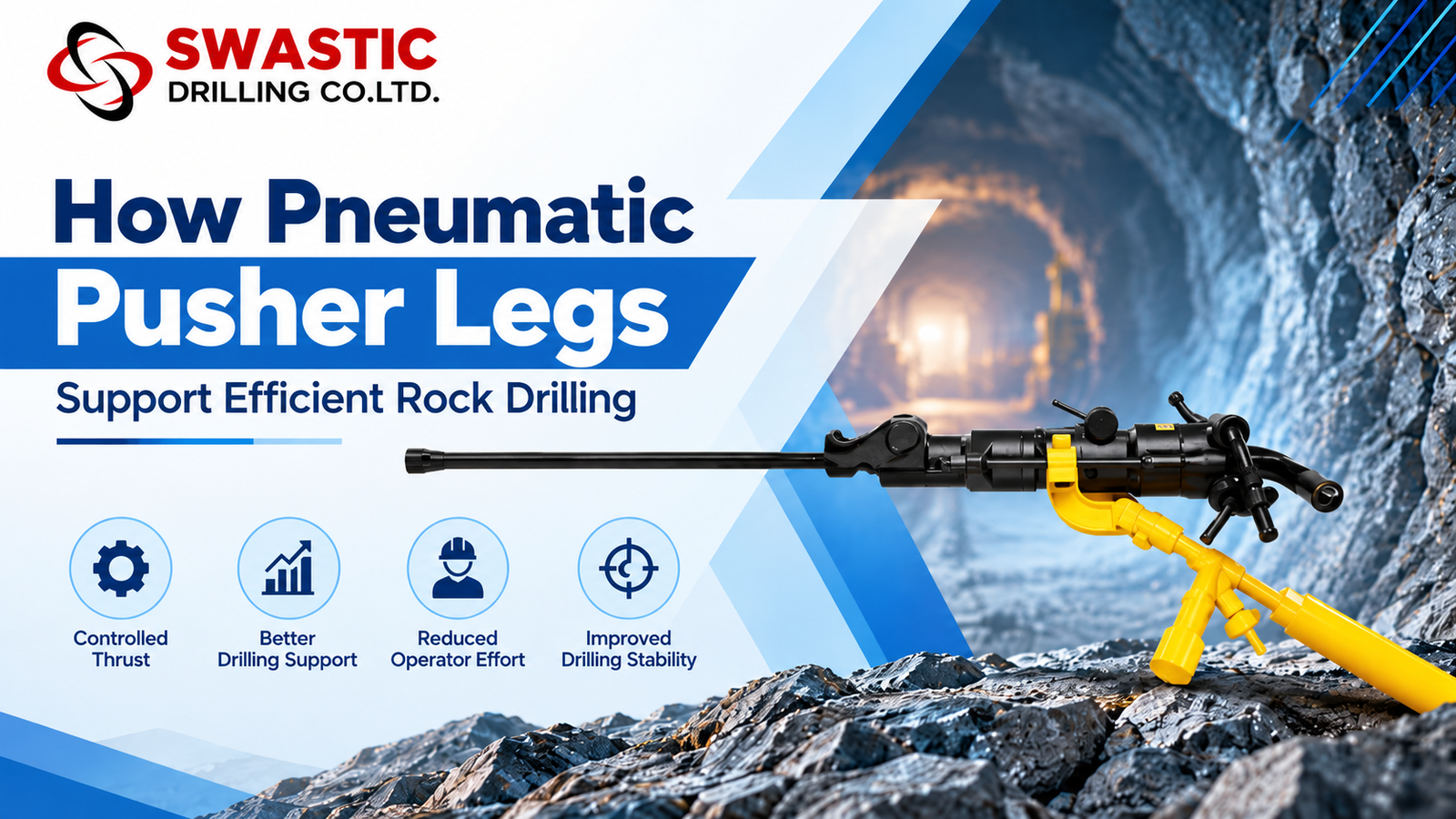
In underground mining and rock drilling, maintaining control over drilling equipment is just as important as choosing the right machine. Uneven rock surfaces, confined working areas and continuous drilling operations can make it challenging for operators to maintain consistent pressure and alignment.
This is where a pneumatic pusher leg becomes an important part of the drilling setup. By supporting the rock drill and providing controlled forward thrust, it helps operators maintain steady drilling conditions while reducing the need for manual force.
Understanding how pusher legs work and what to consider when selecting one can help mining contractors and equipment buyers make more informed purchasing decisions.

What Is a Pneumatic Pusher Leg?
A pneumatic pusher leg is an air-operated support device commonly used with compatible handheld rock drills. It provides forward thrust during drilling, allowing the operator to concentrate on guiding and controlling the machine.
Instead of relying entirely on physical effort to push the drill against the rock surface, operators can use compressed air to extend the pusher leg and maintain contact between the drill bit and the rock.
A rock drill pusher leg is particularly useful in underground mining, tunnelling and construction projects where drilling space may be limited and equipment stability is essential.
How Does a Pneumatic Pusher Leg Work?
The working principle is based on compressed air pressure.
When compressed air enters the pusher leg, it acts on an internal piston, producing a force that extends the leg. This extension provides forward support and thrust to the attached rock drill.
As drilling progresses, the operator can regulate the air supply to control the applied thrust according to the drilling conditions.
The process generally involves three stages:
- Positioning: The operator places the pusher leg against a suitable supporting surface and aligns the rock drill with the intended hole.
- Applying Thrust: Compressed air extends the leg, providing forward pressure to support drilling.
- Controlling Movement: The operator adjusts the thrust as required to maintain drilling control and alignment.
Correct positioning and suitable air pressure are essential for safe and effective operation.
How Pneumatic Pusher Legs Improve Rock Drilling Operations
1. Maintain Consistent Drilling Pressure
Maintaining appropriate feed pressure is important when drilling into hard rock formations. Insufficient pressure may affect drilling progress, while excessive pressure can cause unnecessary stress on the drill bit and equipment.
A pneumatic pusher leg helps operators apply more controlled forward thrust throughout the drilling process.
2. Reduce Manual Operator Effort
Operating a handheld rock drill requires physical effort, especially during repeated drilling cycles.
By supporting part of the machine’s weight and providing mechanical assistance through compressed air, a pusher leg reduces the need for operators to apply forward force manually.
3. Improve Drilling Stability
Unstable drilling positions can affect hole alignment and equipment control.
A properly positioned pusher leg provides additional support, helping operators maintain a steadier drilling position. This is particularly valuable in restricted underground working environments.
4. Support Continuous Drilling Activities
Mining and tunnelling projects often involve repeated drilling operations.
Using an appropriate pusher leg can make drill handling more manageable during successive drilling cycles, supporting a more consistent working process.
5. Adapt to Different Working Conditions
Pneumatic pusher legs are used in various drilling environments, including underground mines, quarrying operations and civil construction projects.
Their suitability depends on factors such as available working space, drill compatibility, required thrust and operating air pressure.
Technical Specifications: DM-051 Pneumatic Pusher Leg
Understanding equipment specifications is an important step when selecting drilling accessories.
The DM-051 model is designed to provide pneumatic support for compatible rock drilling equipment.
| Parameter | Specification |
| Model | DM-051 |
| Weight | 19 kg |
| Length | 1820 mm |
| Extension Length | 1300 mm |
| Piston Diameter | 53 mm |
| Hose Connection | 12.5 mm |
These specifications help buyers evaluate the equipment’s physical dimensions and installation requirements. Compatibility with the intended rock drill and compressed-air system should be confirmed before purchase.
What Should Buyers Consider When Choosing a Pusher Leg?
Selecting the right equipment involves more than comparing dimensions.
Rock Drill Compatibility: Confirm that the pusher leg is suitable for the intended drilling machine and mounting arrangement.
Working Space: Consider available clearance, drilling direction and the space required for positioning the leg.
Air Supply Requirements: Check compatibility with the site’s compressed-air pressure and connection system.
Construction and Maintenance: Examine the design, component quality, maintenance requirements and availability of replacement parts.
Technical Support: Working with an experienced pneumatic pusher leg manufacturer can help buyers clarify equipment compatibility and application requirements.
For mining companies sourcing equipment domestically or internationally, choosing a reliable pneumatic pusher leg manufacturer in India also involves evaluating product documentation, technical assistance and supply capabilities.
Why Supplier Selection Matters
A suitable drilling accessory should match the machine, operating environment and maintenance practices of the mining site.
Before placing an order, buyers should discuss their drilling application, rock drill model and compressed-air arrangements with the pneumatic pusher leg supplier.
Swastic Drilling Company Limited manufactures drilling machinery and related equipment, including the DM-051 pneumatic pusher leg. Buyers can enquire about model suitability and technical requirements before selecting equipment for their operations.
Conclusion
Efficient rock drilling depends on maintaining appropriate thrust, stable equipment positioning and effective operator control.
Pneumatic pusher legs contribute to these requirements by providing air-powered support for compatible rock drills. For mining contractors and equipment buyers, understanding the working principle, technical specifications and application requirements is essential when selecting a suitable model. Choosing the right pusher leg is ultimately about matching the equipment to the conditions in which it will operate.
Product: Pneumatic Pusher Leg
Email: sales@drillmanindia.com
Phone: +91 7065551900

