


 Español

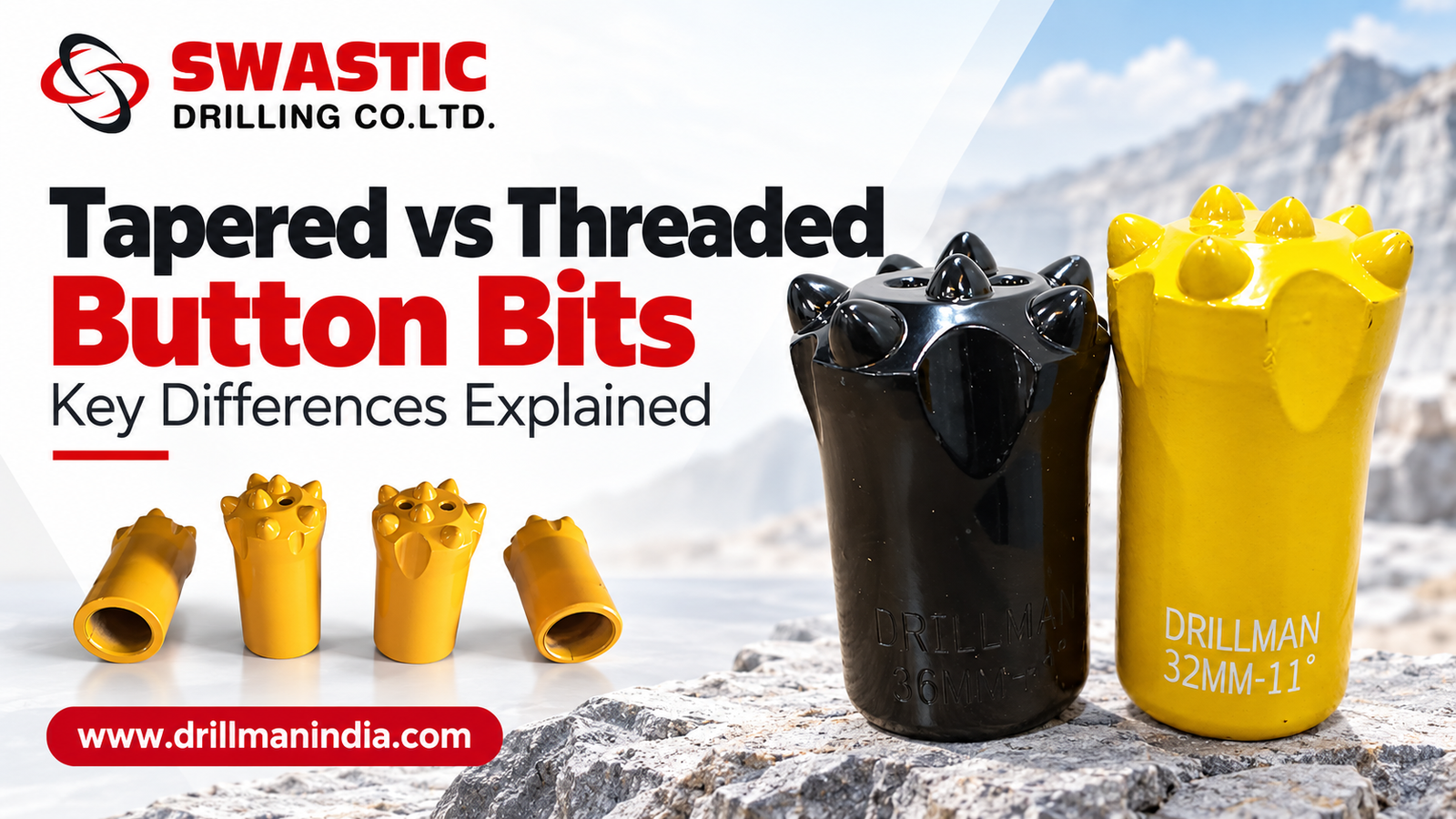
A drill bit may look like a small part of a rock drilling setup, but choosing the wrong one can create problems long before drilling begins. An incompatible connection, unsuitable bit design or incorrect selection for the rock formation can affect drilling efficiency, tool wear and operating costs.
For mining contractors, quarry operators and drilling equipment buyers, understanding the difference between tapered and threaded button bits is essential.
Both are designed to break rock through repeated impacts, but their connection mechanisms and typical drilling applications are different. So, how do you determine which option suits your operation?
Why Does the Button Bit Connection Matter?
In percussion drilling, impact energy travels from the rock drill through the drill rod to the bit. The carbide buttons repeatedly strike the rock, breaking it into smaller fragments that can be removed from the hole.
However, the connection between the bit and drill rod plays an important role in this process. A poorly matched connection can cause premature wear, connection damage or drilling interruptions. This is why selecting mining drill bits involves more than checking the bit diameter. Buyers also need to understand how the bit connects to their drilling equipment.
Tapered Button Bits: A Practical Choice for Short-Hole Drilling
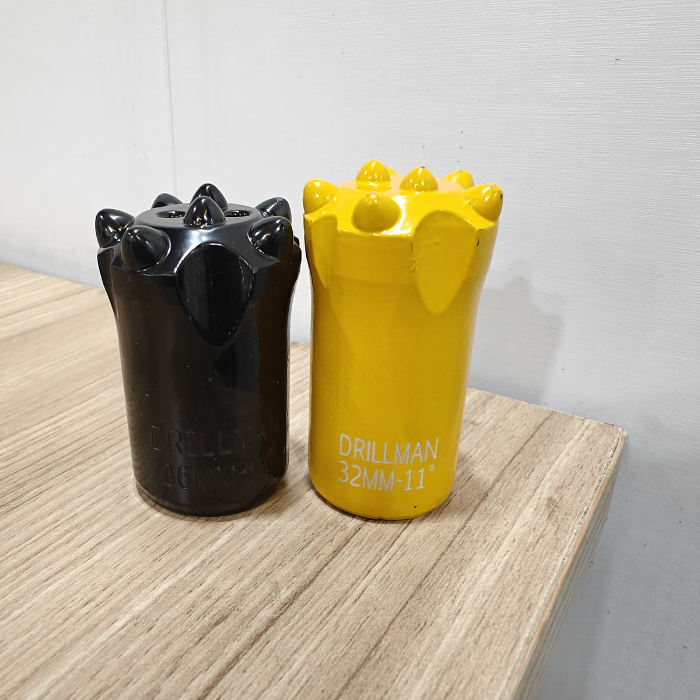
A tapered button bit uses a conical socket that fits onto a matching tapered drill rod. The connection is secured through contact and friction between the two tapered surfaces.
This arrangement is commonly found in handheld pneumatic rock drilling systems.
Tapered button bits are frequently used for:
- Quarrying and stone extraction
- Secondary rock breaking and blasting
- Construction site excavation
- Short-hole drilling in suitable mining operations
One advantage of tapered systems is their straightforward connection arrangement. However, the taper angle must match the drill rod. Even small differences in connection specifications can affect fit and reliability.
For buyers working with portable rock drills, checking taper compatibility is just as important as selecting the correct bit diameter.
Threaded Button Bits: Designed for Compatible Extension Drilling Systems
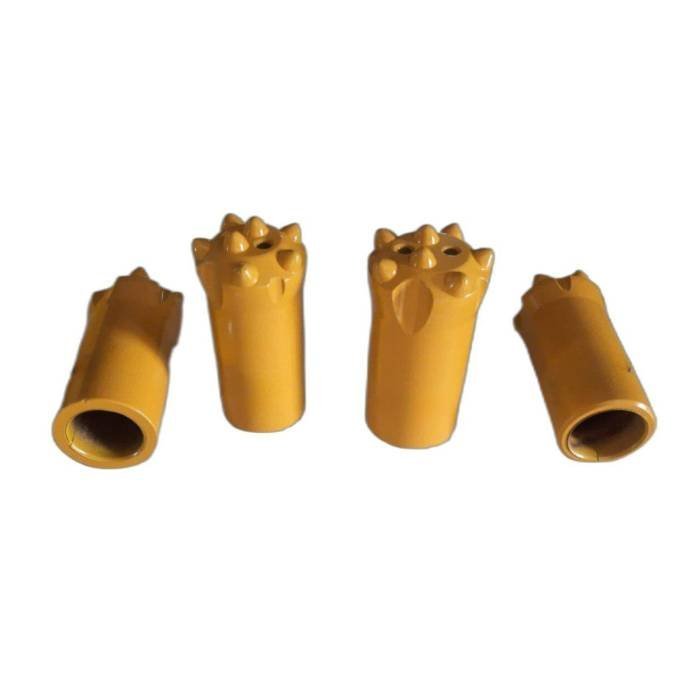
Unlike tapered designs, a threaded button bit uses a machined thread to connect with a compatible drill rod.
This connection is widely used in top hammer drilling systems, including applications where extension rods and coupling sleeves form part of the drill string.
Threaded button bits are commonly selected for:
- Surface mining and quarry production
- Underground development drilling
- Tunnelling and rock excavation
- Bench drilling and blasting operations
In these systems, the top hammer drill bit receives repeated impact energy transmitted through the drill string. Threaded connections allow compatible drilling components to be assembled into longer drill strings, making them useful where drilling depth and equipment configuration require extensions.
However, thread compatibility is essential. Buyers must verify the thread specification rather than assuming that similar-looking connections will fit.
Tapered vs Threaded Button Bits: What Actually Changes?
The main difference is not how the carbide buttons break rock. It is how the bit becomes part of the drilling system.
| Selection Factor | Tapered Button Bit | Threaded Button Bit |
| Connection Design | Tapered friction-fit | Threaded connection |
| Typical Drill Setup | Handheld pneumatic drills | Compatible top hammer drilling systems |
| Drill Rod Requirement | Matching tapered rod | Matching threaded rod |
| Common Application | Short-hole drilling | Production and extension drilling |
| Connection Check | Taper angle and socket size | Thread type and dimensions |
| Extension Drilling | Generally limited arrangements | Suitable for compatible extension systems |
The table highlights an important point: neither connection type should be selected without considering the complete drilling setup.
Five Questions Buyers Should Ask Before Ordering Button Bits
Instead of choosing a drill bit based only on price or appearance, ask these practical questions.
1. What Rock Will You Be Drilling?
Hard, abrasive and fractured formations create different drilling challenges. Button shape, carbide characteristics and bit design should suit the expected conditions.
2. Which Drill Rod Connection Do You Use?
Confirm whether the equipment uses a tapered or threaded connection. For threaded systems, the exact thread type must be verified.
3. What Hole Size and Depth Are Required?
Hole diameter and drilling depth influence the selection of both the bit and drill string configuration.
4. How Will Bit Wear Be Managed?
Regular inspection of carbide buttons, bit faces and connections helps identify wear before it causes more significant problems.
5. Can the Manufacturer Confirm Compatibility?
An experienced button bits manufacturer should be able to discuss connection dimensions, available bit designs and application suitability.
Similarly, when contacting a threaded button bits manufacturer, share the drill model, drill rod specification and operating conditions to support accurate product selection.
A Common Buying Mistake: Choosing by Appearance Alone
Two button bits may have similar cutting faces and diameters but completely different connection requirements. A tapered button bit cannot simply replace a threaded button bit because both are intended for rock drilling. Before placing an order, buyers should confirm the connection, drilling equipment and operating requirements. This reduces the risk of purchasing incompatible consumables.
Final Thoughts: Choose the Connection Before Comparing the Price
Tapered and threaded button bits serve different drilling arrangements. Tapered connections are commonly associated with handheld short-hole drilling, while threaded connections are widely used in compatible production and extension drilling systems.
The right choice starts with understanding the equipment and ends with selecting a bit suited to the rock formation and drilling application.
At Swastic Drilling Company Limited, our DRILLMAN range includes rock drilling consumables for different drilling requirements.
Explore our button bit range and discuss your application with our team to identify suitable drilling tools.
Product: Button Bits Tapered | Threaded
Email: sales@drillmanindia.com
Phone: +91 7065551900

