


 Español

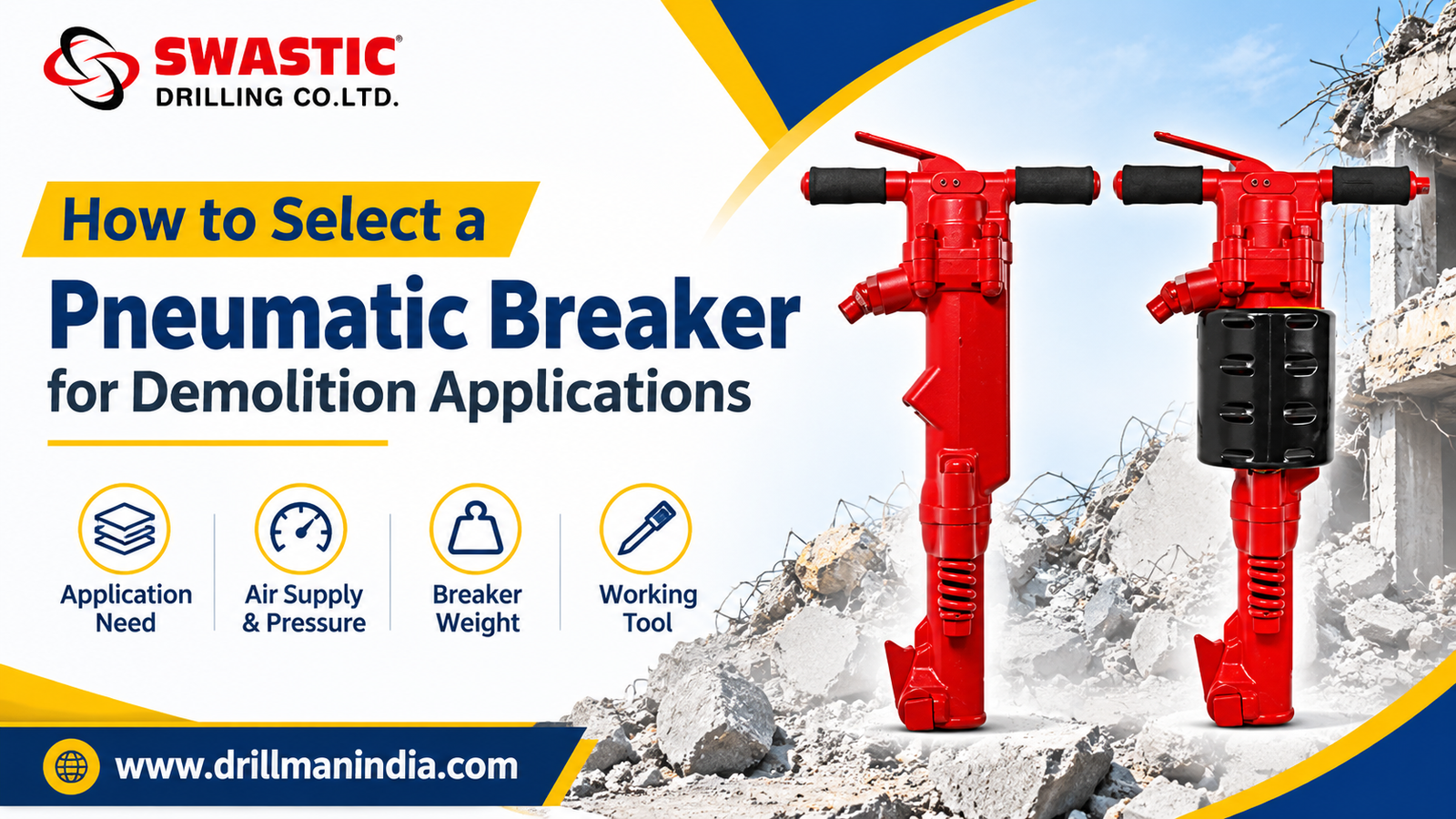
Demolition work often involves breaking concrete, removing old foundations, cutting through hard surfaces, and clearing damaged structures. For these applications, choosing the right Pneumatic breaker can make a major difference in productivity, operator comfort, and overall project efficiency.
A breaker that is too light may struggle with hard concrete, while an unnecessarily heavy machine can increase operator fatigue and air consumption. Buyers should therefore evaluate the application, material hardness, operating conditions, and air supply before making a selection.
1. Start with the Demolition Application
The first step is to understand what material needs to be broken and how demanding the job will be.
For general concrete breaking, floor removal, trench work, and medium-duty demolition, a Pneumatic concrete breaker can be an effective choice. Heavier demolition work, such as breaking reinforced concrete, thick foundations, and hard surfaces, may require a more powerful Pneumatic demolition breaker.
The right machine should match the type and thickness of the material instead of simply selecting the largest breaker available.
2. Consider Breaker Weight and Handling
Breaker weight influences both impact performance and operator control.
Lighter breakers are generally easier to handle and may be suitable for smaller repair or maintenance jobs. Heavier breakers can deliver greater breaking force for demanding demolition applications, but they also require careful handling and suitable operating conditions.
Buyers should consider whether the equipment will be used vertically, horizontally, or in confined working areas. Operator comfort becomes especially important when breakers are used continuously during a shift.
3. Check Air Supply Requirement
A pneumatic breaker depends on compressed air, so the available compressor capacity must be considered before selecting the machine.
The compressor should be capable of providing the required operating pressure and airflow consistently. An inadequate air supply can reduce breaker performance and lead to inefficient operation.
Before purchasing, compare the breaker’s air requirements with the compressor available at the job site. This is particularly important for contractors operating several pneumatic tools from the same air source.
4. Choose the Correct Working Tool
The breaker itself is only part of the system. The working tool or accessory should also match the application.
Different demolition jobs may require pointed tools, chisels, moil points, or other suitable accessories. For example, a pointed tool may help initiate cracks in hard concrete, while a chisel-type tool may be more suitable for surface removal or controlled breaking.
Correct tool selection can improve breaking efficiency and reduce unnecessary stress on the machine.
5. Evaluate Construction and Maintenance Requirements
Demolition environments are demanding. Dust, vibration, repeated impact, and rough handling can affect equipment life.
When comparing machines, buyers should look at overall construction quality, ease of maintenance, availability of replacement parts, and service support. Regular lubrication, inspection, and correct operating practices can help maintain consistent performance.
A reliable Pneumatic breaker manufacturer should also be able to provide technical guidance related to machine selection, operation, maintenance, and compatible accessories.
6. Consider the Complete Drilling and Demolition Requirement
Many mining, construction, quarrying, and infrastructure projects require both drilling and breaking equipment.
A contractor using a rock drilling machine for drilling operations may also require pneumatic breakers for concrete removal, trenching, or secondary breaking work. Choosing equipment from a supplier familiar with both drilling and demolition applications can simplify procurement and technical support.
Similarly, buyers comparing a rock drill machine should evaluate operating conditions, application requirements, air consumption, compatible drilling tools, and maintenance needs rather than focusing only on initial purchase cost.
7. Assess Manufacturer Support
Equipment selection does not end with the machine itself. Technical assistance, spare parts availability, and product knowledge can be equally important over the equipment’s working life.
When evaluating a rock drilling machine manufacturer, buyers should check whether the supplier can provide suitable equipment recommendations based on actual operating conditions.
For international buyers sourcing from a rock drilling machine manufacturer in India, it is also useful to confirm product documentation, export support, spare-part availability, and communication regarding technical requirements before placing an order.
Final Thoughts
Selecting the right pneumatic breaker requires a clear understanding of the demolition task, material hardness, breaker weight, compressed-air availability, working tools, and maintenance requirements.
A well-matched Pneumatic concrete breaker can improve productivity in routine concrete removal, while a suitable Pneumatic demolition breaker can handle more demanding breaking applications. Instead of choosing equipment only by price or size, buyers should evaluate the complete operating requirement and work with an experienced Pneumatic breaker manufacturer capable of providing appropriate technical support.
The right selection can help achieve more consistent demolition performance while reducing downtime and unnecessary operating difficulties.
Product: Pneumatic Breaker
Email: sales@drillmanindia.com
Phone: +91 7065551900

