


 Español

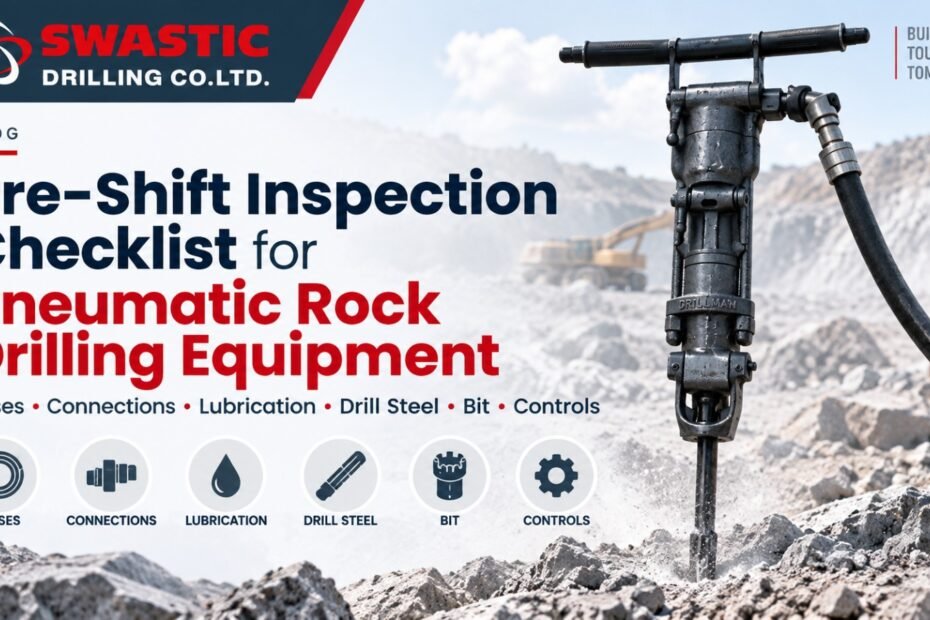
A pre-shift inspection checklist for pneumatic rock drilling equipment helps operators identify visible wear, damaged connections and other potential issues before drilling begins.
The condition of the air hose, connections, lubrication system, drill steel, bit and operating controls
can all influence how the complete drilling setup performs. For wet-type drilling, the water-flushing
system adds another important checkpoint.
A consistent pre-shift inspection helps operators identify visible wear, damage or connection issues
before drilling begins.
For pneumatic rock drills used in mining, quarrying, tunnelling and construction, the following
checklist provides a practical starting point.
1. Inspect the Rock Drill Before Connecting the Air Supply
Start with the machine itself.
Look over the accessible exterior of the pneumatic rock drill and check for:
- Visible physical damage
- Loose or missing components
- Damaged fittings
- Unusual wear
- Dirt around connection points
- Damaged or obstructed controls
Repeated impact, vibration, transport and exposure to demanding site conditions make this simple
visual check worthwhile before every shift.
If something looks different from the machine’s normal condition, investigate it before putting the
drill into operation.
2. Check the Compressed-Air Hose and Connections
A pneumatic rock drill depends on the air supply reaching the machine through the hose and
connections.
Inspect the accessible length of the air hose for:
- Cuts or cracks
- Excessive abrasion
- Kinking
- Damaged fittings
- Loose connections
- Visible deterioration
Also check that the machine connection is clean and properly fitted.
Both the DRILLMAN DM041 Dry Type and DRILLMAN DM041W Wet Type have a published 19 mm
hose connection. The hose and connection arrangement should therefore be suitable for the specific
machine and drilling setup.
The hose route matters as well. Avoid positioning it where it can be crushed, dragged repeatedly
over sharp surfaces or interfere with the operator’s working area.
3. Keep the Air Connection Clean
Mining, quarrying and construction sites expose drilling equipment to dust, dirt and moisture.
Before connecting the air hose, visually check the coupling and machine inlet.
Contamination around a pneumatic connection should not be allowed to enter the machine during
connection.
This is a small check, but it supports better equipment care and should become part of the normal
pre-start routine.
4. Check the Lubrication Arrangement
Lubrication is an important consideration in pneumatic drilling equipment because internal
components operate under repeated impact and movement.
Before starting the drill, visually check the approved lubrication arrangement for:
- Available lubricant
- Leakage
- Damaged fittings
- Loose connections
- Dirt or contamination
- Anything visibly interfering with the system
The exact lubricant type, quantity, setting and lubrication interval should always follow the
approved instructions for the particular rock drill.
Do not assume that requirements from one pneumatic rock drill model apply automatically to
another. Using a pre-shift inspection checklist for pneumatic rock drilling equipment can help identify visible issues before the machine enters operation.
5. Inspect the Drill Rods
The rock drill should not be inspected in isolation. The drill steel transfers the machine’s impact and
rotation towards the bit.
Before fitting it, check for:
- Visible bending
- Cracks
- Abnormal wear
- Damage around the shank or connection
- Deformation
- Dirt or foreign material around mating surfaces
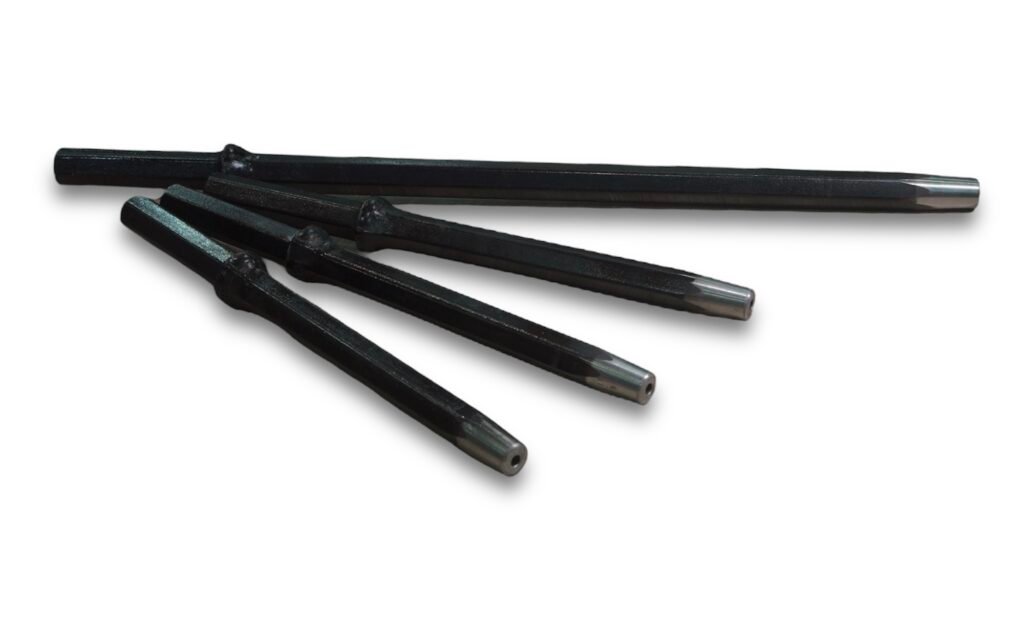
The drill rods should fit the machine correctly.
If the connection appears damaged or does not fit as expected, forcing the components together can
create a bigger problem.
Internal link:
→ Explore DRILLMAN Drill Rods
6. Inspect the Drill Bit
Continue the inspection to the rock-contact end of the drilling system.
Look at the drill bit for:
- Visible cracks or physical damage
- Abnormal cutting-structure wear
- Connection damage
- Deformation
- Blocked flushing openings where applicable
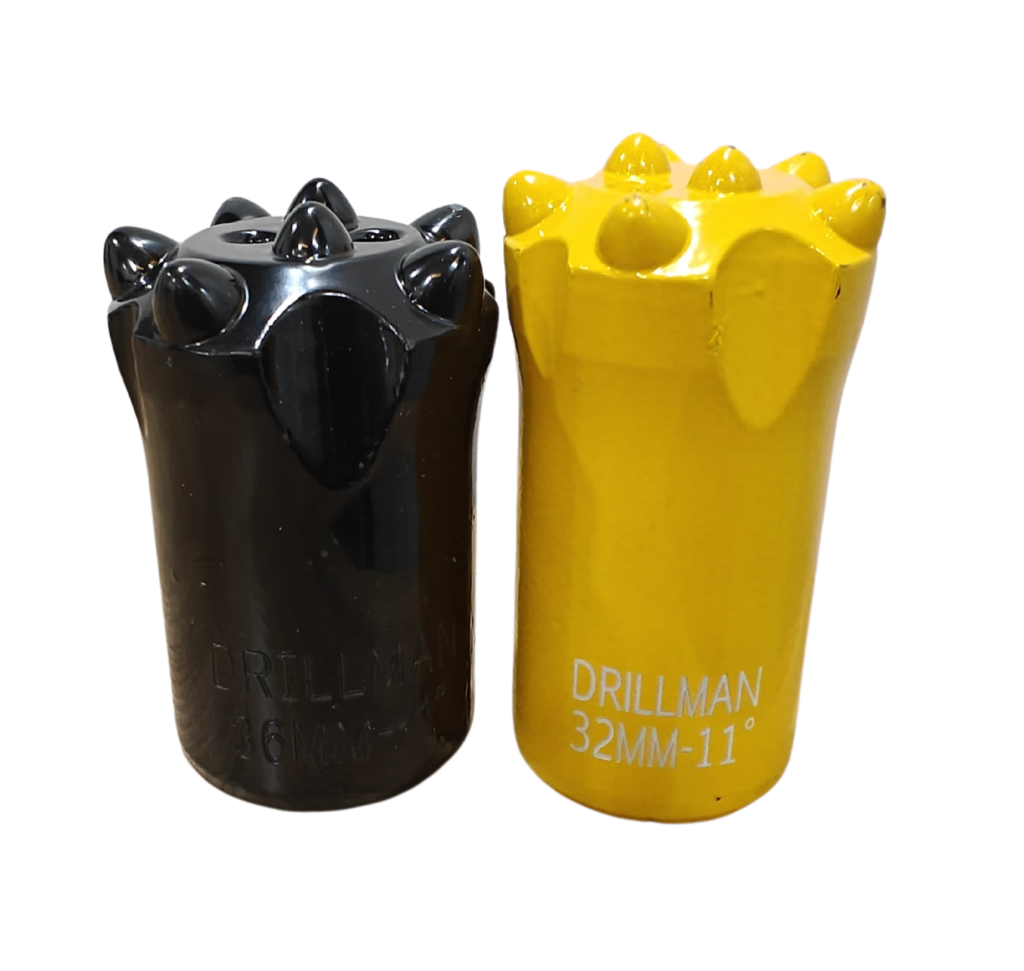
This is important because a change in drilling performance should not automatically be treated as a machine problem.
The rock drill, drill steel and drill bit operate as a system, and the condition of each component can
influence the overall drilling process.
→ Explore DRILLMAN Drill Bits
7. Dry-Type Drilling: Inspect the Complete Air-Driven Setup
The DRILLMAN DM041 is a dry-type pneumatic rock drill designed for drilling applications where
water flushing is not required.
According to the current product information, it is suitable for applications including:
- Underground mining
- Surface mining
- Quarry drilling
- Construction and infrastructure projects
- Tunnelling
- Road works
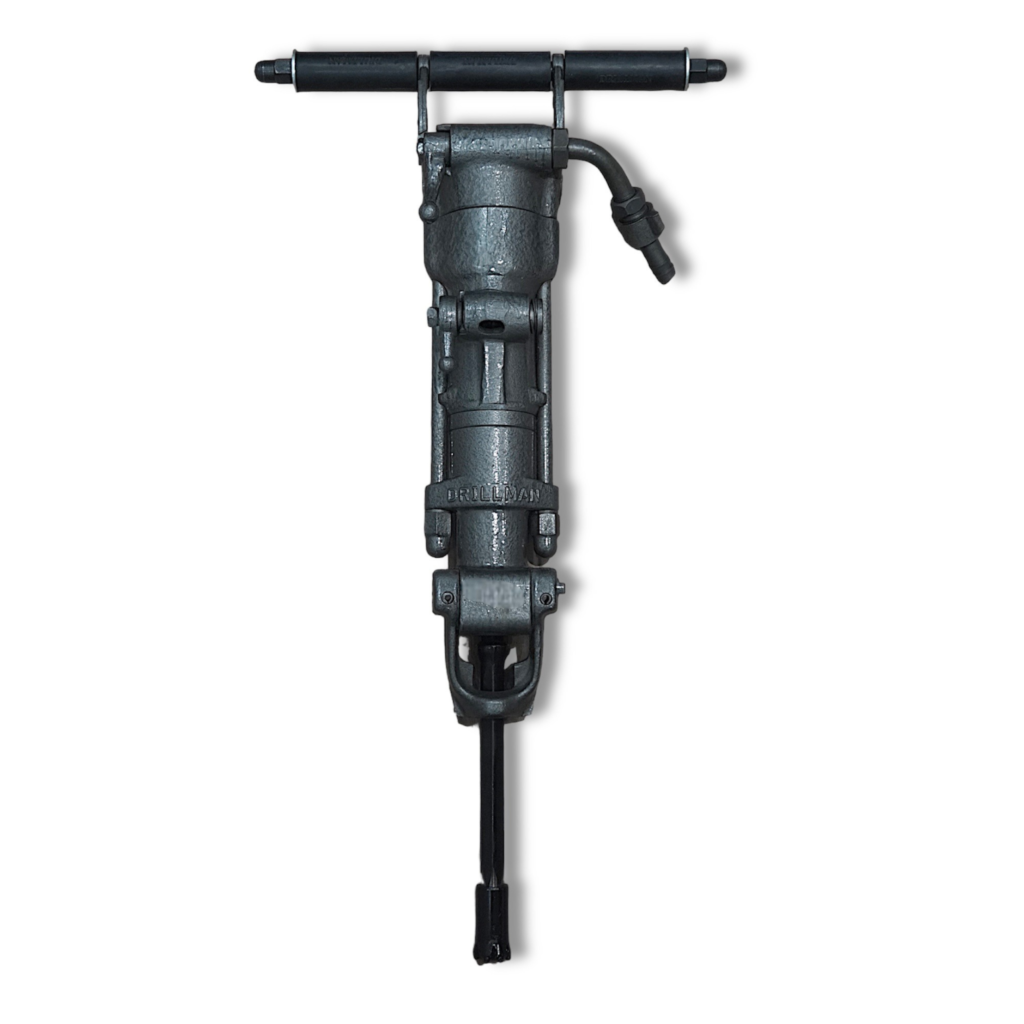
It is used for horizontal and downward drilling in hard and medium-hard rock formations.
DRILLMAN DM041 Dry Type – Technical Specifications
| Specification | DM041 |
| Weight | 25 kg |
| Air Requirement | 57 l/s, 120 cfm |
| Hole Range | 29–40 mm |
| Penetration Rate | 425 mm/min |
| Rotation Speed | 215 rpm |
| Impact Per Minute | 2,000 |
| Hose Connection | 19 mm |
For a dry-type drill such as the DM041, the pre-shift inspection should pay particular attention to the
compressed-air path, hose and connections, lubrication arrangement, drill steel, bit and controls.
Is a dry-type pneumatic rock drill suitable for your application?
The answer depends on the drilling direction, rock conditions, hole requirement, compressed-air
supply and whether water flushing is required at the site.
→ View the DRILLMAN DM041 Dry Type Rock Drill
8. Wet-Type Drilling: Add the Water-Flushing System
A wet-type pneumatic rock drill introduces an additional system that needs attention before drilling:
water flushing.
The DRILLMAN DM041W Wet Type Rock Drill uses water flushing to:
- Help suppress dust
- Cool the drill bit
- Support the drilling process
Before starting a wet-type rock drill, visually check:
- Water hose condition
- Water connections
- Damaged fittings
- Visible leakage
- Flushing openings
- Anything that may restrict the water path
This inspection should include the flushing path through the drilling setup where applicable.
The DM041W is designed for applications including:
- Underground mining
- Surface mining
- Quarry drilling
- Tunnelling
- Construction and infrastructure work
- Rock excavation where dust control is required
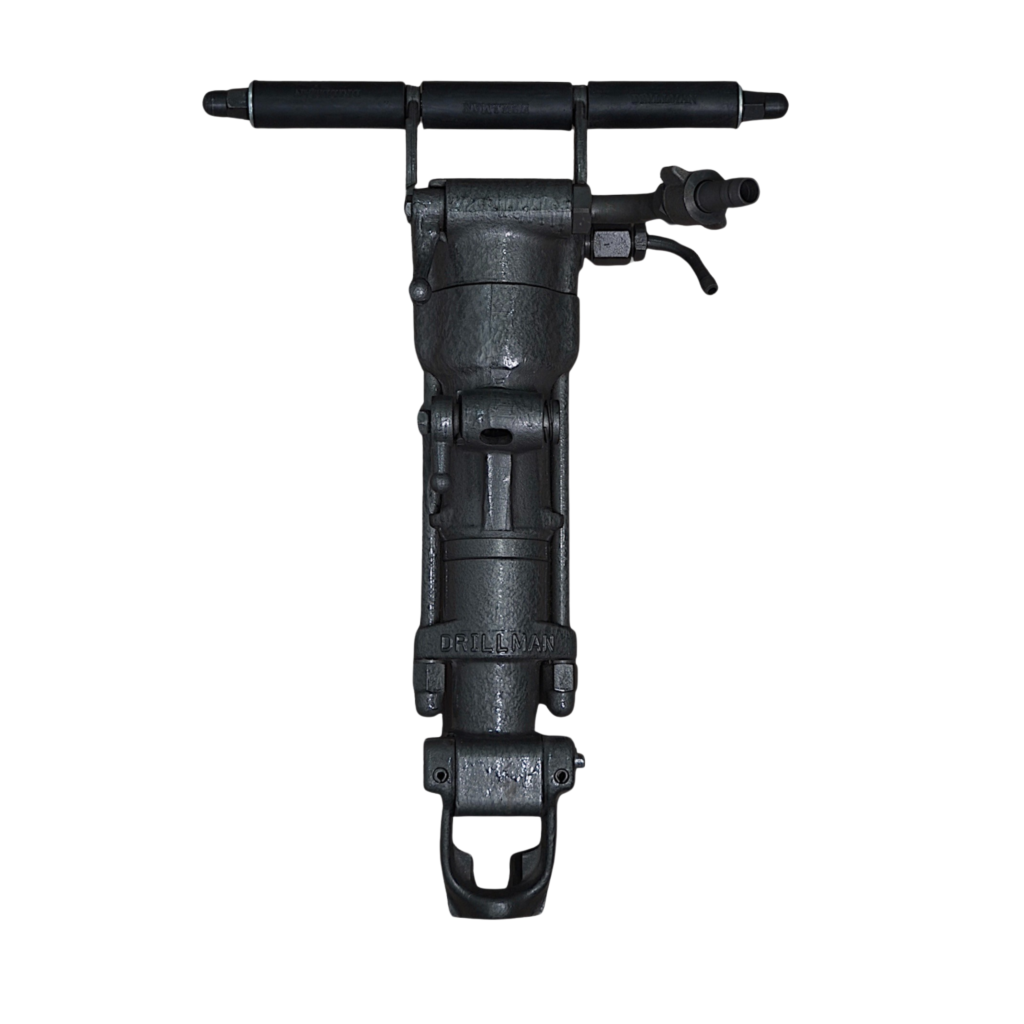
DRILLMAN DM041W Wet Type – Technical Specifications
| Specification | DM041W |
| Weight | 26 kg |
| Air Requirement | 48 l/s, 101 cfm |
| Hole Range | 29–40 mm |
| Penetration Rate | 410 mm/min |
| Rotation Speed | 215 rpm |
| Impact Per Minute | 2,050 |
| Hose Connection | 19 mm |
Does your drilling application require water flushing?
Where water flushing or additional dust control is required, a wet-type pneumatic rock drill may be
the more appropriate configuration.
→ View the DRILLMAN DM041W Wet Type Rock Drill
9. Check the Operating Controls
Before normal drilling begins, check the accessible operating controls.
Look for:
- Visible damage
- Excessive looseness
- Obstruction
- Anything that differs from normal operation
Controls should not be bypassed or temporarily modified simply to keep a machine operating.
If the drill behaves noticeably differently from normal after starting, the cause should be investigated
rather than continuing operation without assessment.
10. Check the Immediate Drilling Area
A pre-shift inspection should finish with the work area.
Check for:
- Poorly routed air or water hoses
- Loose drill steels or accessories
- Tools obstructing the working area
- Trip hazards
- Unnecessary material around the drilling position
Good housekeeping also makes it easier to see and monitor hoses, fittings and connections while
drilling is in progress.
Pre-Shift Inspection Checklist for Pneumatic Rock Drilling Equipment: Quick Check
| Inspection Point | What to Check |
| Rock drill | Damage, unusual wear, loose components |
| Air hose | Cuts, abrasion, cracking, kinks |
| Connections | Fit, damage and cleanliness |
| Lubrication arrangement | Leakage, damage, contamination |
| Drill steel | Straightness, cracks, shank and connection condition |
| Drill bit | Cutting structure, damage and connection |
| Controls | Damage, looseness or obstruction |
| Water system – wet type | Hose, connections and flushing path |
| Work area | Hose routing, tools and housekeeping |
A checklist like this should support – not replace – the manufacturer’s approved maintenance and
operating procedures.
DM041 or DM041W: Which Configuration Fits the Job?
Dry and wet pneumatic rock drills serve different operating requirements.
| DM041 Dry Type | DM041W Wet Type | |
| Configuration Dry | Dry | Wet / water flushing |
| Weight | 25 kg | 26 kg |
| Air Requirement | 57 l/s, 120 cfm | 48 l/s, 101 cfm |
| Hole Range | 29–40 mm | 29–40 mm |
| Penetration Rate | 425 mm/min | 410 mm/min |
| Rotation Speed | 215 rpm | 215 rpm |
| Impact Per Minute | 2,000 | 2,050 |
| Hose Connection | 19 mm | 19 mm |
The published specifications show that the two machines should not simply be treated as
interchangeable versions of the same drill.
The correct choice should consider:
- Dry or wet drilling requirement
- Rock formation
- Hole requirement
- Drilling direction
- Available compressed-air supply
- Site conditions
- Requirement for dust control
- Compatible drill steel and drill bit
Choosing the correct dry or wet configuration starts with the application – not simply the
machine specification. This pre-shift inspection checklist for pneumatic rock drilling equipment is intended to help operators review the complete drilling setup before work begins.
A Better Pre-Shift Habit: Check the Complete Drilling System
Instead of asking only:
“Is the rock drill ready?”
A more useful question is:
“Is the complete drilling system ready?”
Follow the drilling path:
Air supply → Hose → Connections → Lubrication → Rock Drill → Drill Steel → Drill Bit
For wet drilling, add:
Water supply → Flushing system
This approach helps operators consider the complete setup rather than focusing only on the
machine.
It can also make it easier to recognise whether an issue is associated with the rock drill itself or
another part of the drilling system.
Talk to DRILLMAN About Your Drilling Application
Selecting a pneumatic rock drill is not only about comparing penetration rate, rotation speed or
impact frequency.
The application, rock conditions, drilling direction, hole requirement, air supply, dry or wet drilling
requirement, drill steel and bit should be considered together.
If you are evaluating pneumatic rock drilling equipment for mining, quarrying, tunnelling,
construction or infrastructure work, share your drilling requirement with our team.
We can help you identify a suitable combination of DRILLMAN pneumatic rock drill, drill rod and
drill bit for your application.
Swastic Drilling Company Limited | DRILLMAN
www.drillmanindia.com
sales@drillmanindia.com
+91 9311036100

